Recently, the communities of Tay and Nung ethnic groups in Ea Ly commune (Song Hinh district) have frequently introduced their traditional folk music at the district’s musical events, and this has been widespread responded. “Then” singing is not only the beauty of the ethnic groups of Tay, Nung but also the precious property creating the diversity in both culture and race among the compatriots in Song Hinh district.
Currently, Ea Ly has more than 60% of ethnic groups living in harmony. The two ethnic groups of Tay and Nung consists of 600 households (accounting for 40 of the ethnic minority groups) living in Ea Ly commune. Currently, when the economy has been stable, the compatriots of Tay, Nung living in Ea Ly commune desire to sing and transfer “then” singing more immensely. In Ea Ly commune, there have been 2 “then” singing clubs under the direct management of Song Hinh district’s association of art and literature, these are Tan Lap ham let “then” singing club with 14 members and The “then” singing club of the elderly in Ea Ly commune with 12 members, both of which meet frequently.
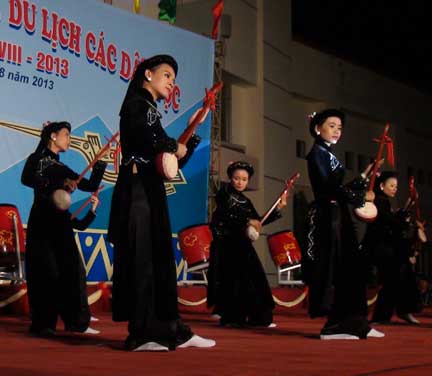
Mrs. Luong Thi Hy, from Tan Lap “then” singing club, said that each club member trains hard in singing and musical instrument accompanying. Despite certain difficulties, with the attentive teaching and sharing by Mr. Sao, each evening, the club members gather to sing, which is so joyfyl and enjoyable. Furthermore, recently, leaders of the district’s culture sector have paid much attention to advertising and preserving “then” singing, giving us more opportunities to sing at the district’s musical events.
Mr. Phan Thanh Quyen, head of Song Hinh district’s division of culture-information, let known, “The district’s culture sector will create all favorable conditions for “then” singing not to develop among the Tay and Nung communities but also be popularized at the district’s cultural events and Phu Yen province festival of culture-sports-tourism. Ea Ly commune is the leading unit in actively seeking for the human resources to develop the value of intangible culture of the ethnic minority groups in Song Hinh district. I hope that other ethnic minority groups living in the district will also be more effervescent in seeking for human resources to develop and preserve their own cultural features.
Nonetheless, to have a well-prepared and professional “then” singing performance, it requires not only the careful investment in the singer’s voice but also the performing costumes and musical instruments, therefore, apart from expenditure self-paid by the compatriots, the culture sector, it also requires the support in expenditure for the sake of “then” singing to be more frequently maintained.